


Being prepared is also a way of taking care of ourselves.
A few days ago, we had the opportunity to visit a GAP-sponsored school in Guadalajara, where our EMT Omar Ortiz and our business and operations strategist Alessandra Hawa spoke with middle school students about fire prevention and what to do in case of a burn.
Rather than focusing only on what to do once an emergency has already happened, we wanted to start much earlier: with those everyday situations that we often don’t pay much attention to.
Overloading an electrical outlet. Leaving appliances plugged in. An accident in the kitchen. Coming into contact with strong cleaning chemicals. Fairly ordinary situations that, in a matter of seconds, can turn into something much more serious.
One of the examples we discussed was something very common in Mexico: those large pots our mothers or grandmothers use to prepare food for the whole family. To us, it may be a completely familiar sight, but for a small child, getting too close can pose a serious burn risk, whether by pulling the contents down onto themselves or even falling into the pot.
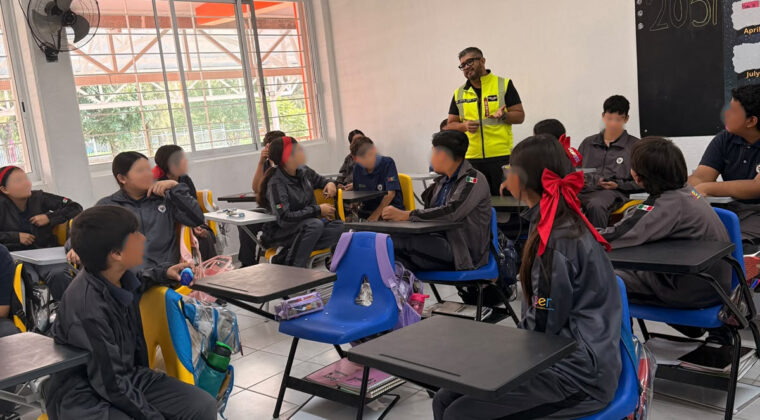
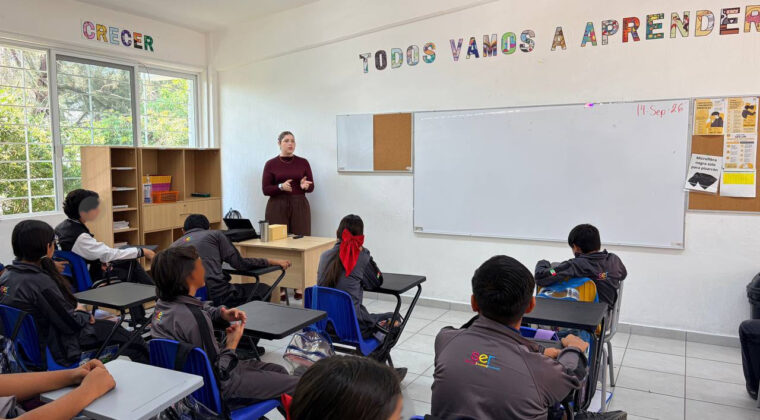
We also talked about fireworks. At first, some of the students laughed. To them, fireworks were something fun and quite normal. But when Omar explained that carrying certain types of fireworks in your pockets can be dangerous, and that even friction can create a spark, their expressions changed. So did their attention. Sometimes, simply explaining the “why” is enough to make us see a risk differently.
The conversation kept growing. We talked about what to do if a car catches fire, why some patients with severe burns need to be transported to the United States, and, above all, what to do if they ever find themselves facing a situation like this.
Then the questions started. So did the stories: situations they had experienced themselves, fires they had witnessed, and questions about why, in certain cases, the fire had spread so quickly.
In the end, that was exactly the goal: for them to leave with information we hope they will never have to use, but that one day could help them, a friend, or someone in their family.
We are very grateful to the school principal for giving us the opportunity to have this conversation with the students. During the talk, he shared a phrase that really stayed with us and perfectly sums up the purpose of initiatives like this:
“It is better to know this information and never need it than to need it and not have it.”
And that is what it is all about.
We cannot prevent every emergency, but we can learn to recognize risks, ask questions, and know how to react when something happens.
At AirLink Ambulance, we are used to helping once an emergency has already happened. Through AirLink Horizon, we also want to help before it happens by sharing knowledge that can help prevent it.
Because sometimes, helping begins long before someone needs to be transported.